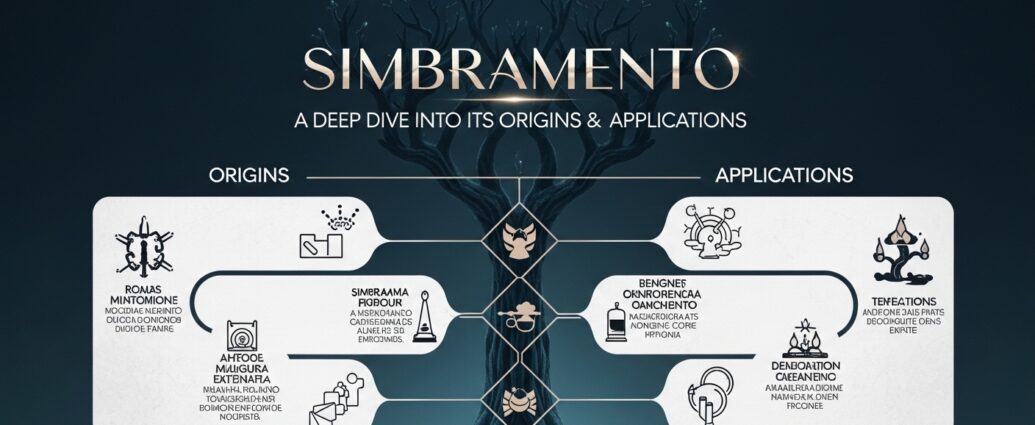
Have you ever wondered how innovative technologies shape our world? One such fascinating development is Simbramento. This term may be unfamiliar to many, but its impact resonates across various industries and applications. From enhancing efficiency in manufacturing to revolutionizing data management, Simbramento has emerged as a game-changer. Join us as we explore the origins of this intriguing technology, trace its evolution through the years, and uncover how it continues to transform fields like agriculture, healthcare, and beyond. Whether you’re a tech enthusiast or simply curious about emerging trends, there’s plenty to discover about Simbramento!
What is Simbramento?
Simbramento is a cutting-edge technology that combines simulation and experimentation. It allows users to create virtual models of real-world systems, enabling precise analysis and testing without the limitations of physical prototypes.
At its core, Simbramento leverages advanced algorithms and data analytics. This synergy empowers businesses to simulate various scenarios, forecasting outcomes based on different variables.
Imagine running simulations for everything from supply chain logistics to urban planning. The potential applications are vast and impactful.
What sets Simbramento apart is its ability to provide insights into complex challenges. By visualizing problems in a simulated environment, decision-makers can explore innovative solutions before implementation.
This technology not only enhances efficiency but also reduces costs associated with traditional trial-and-error methods. As industries evolve rapidly, Simbramento stands out as an essential tool for navigating this dynamic landscape with confidence.
The Origins of Simbramento
Simbramento traces its roots back to early experimental techniques in agriculture. Initially, farmers sought innovative ways to enhance plant growth and yield.
The term itself emerged from a combination of local dialects, reflecting the cultural significance of agricultural practices in those regions. As communities shared their methods, simbramento became synonymous with specific cultivation strategies.
Over time, researchers began studying these traditional practices scientifically. This fusion of old wisdom and modern science led to groundbreaking insights into soil health and crop resilience.
As globalization spread knowledge across borders, various cultures adopted elements of simbramento. Consequently, it evolved into a more refined technique that highlights sustainable farming principles while respecting local traditions.
How it has Evolved Over the Years
Simbramento has seen significant evolution since its inception. Initially, it was a rudimentary concept focused on basic functionalities. As technology advanced, so did the applications and complexity of simbramento.
In the early stages, practitioners relied heavily on manual processes. Over time, automation began to play a crucial role. This shift allowed for greater efficiency and accuracy in implementing simbramento techniques.
The integration of artificial intelligence further revolutionized this field. With machine learning algorithms at play, the adaptability and precision of simbramento improved dramatically.
Today, we see a wide range of tools that enhance user experience and broaden application possibilities. From healthcare to education, simbramento is now more accessible than ever before.
This ongoing transformation showcases not just technological advancements but also innovative thinking across diverse sectors.
Applications in Different Fields
Simbramento has found its way into various sectors, showcasing its versatility and usefulness. In healthcare, it’s used for precise data analysis, enhancing patient outcomes through personalized treatments. Hospitals are leveraging this technology to streamline operations and improve diagnostics.
In the realm of education, simbramento is transforming learning experiences. It allows educators to tailor content based on student performance analytics, fostering a more engaging environment.
The manufacturing industry benefits significantly as well. By implementing simbramento in supply chain management, companies optimize production processes and reduce waste.
Even in marketing, businesses utilize this technology to analyze consumer behavior patterns. This enables them to create targeted campaigns that resonate with specific audiences.
These examples illustrate the diverse applications of simbramento across multiple fields, highlighting its capacity for innovation and efficiency.
Advantages and Limitations of Simbramento
Simbramento offers several advantages that make it an attractive choice for various industries. Its precision allows for accurate data analysis, enabling businesses to make informed decisions. Moreover, the technology enhances productivity by automating complex tasks that would typically require significant human effort.
However, there are limitations to consider. The initial setup can be costly and time-consuming, which may deter smaller enterprises from adopting it. Additionally, as with any advanced technology, there’s a learning curve involved. Employees need training to maximize its potential.
Another aspect is the dependency on data quality. Poor-quality input can lead to flawed outputs, undermining the system’s reliability. Furthermore, ethical concerns regarding data privacy persist in discussions about Simbramento applications across different sectors.
The Future of Simbramento Technology
The future of Simbramento technology is brimming with potential. As industries seek more efficient solutions, the demand for this innovative approach continues to rise.
Emerging advancements in artificial intelligence are set to enhance its capabilities. Integration with AI can streamline processes and improve accuracy across various applications.
Moreover, sustainability remains a key driver. Companies are increasingly exploring how Simbramento can reduce waste and promote eco-friendly practices, aligning with global efforts toward environmental responsibility.
Collaboration between tech developers and industry experts will spark new ideas. This synergy could lead to groundbreaking uses that have yet to be imagined.
Investments in research also promise exciting developments on the horizon. Enhanced algorithms and tools may redefine what’s possible within this field, making it an area worth watching closely as we move forward into uncharted territory.
Conclusion
The journey of Simbramento has been fascinating to observe. Its roots lie deep in innovative thinking and a desire for improvement across various sectors. Over the years, it has transformed significantly, adapting to new technologies and methodologies.
Today, Simbramento finds applications in multiple fields like healthcare, education, and even technology development. Each sector benefits uniquely from its implementation. The advantages are clear—enhanced productivity and efficiency often stand at the forefront. However, challenges remain that need addressing for broader acceptance and integration into everyday practices.
As we look toward the future of this technology, possibilities seem endless. Emerging trends suggest that Simbramento will continue to evolve alongside advancements in artificial intelligence and machine learning. This ongoing evolution could lead to more sophisticated applications that push boundaries further than ever before.
Embracing this change is essential as industries navigate through their own unique landscapes with evolving demands. Understanding the intricacies of now can prepare us for what’s next on this thrilling technological horizon.