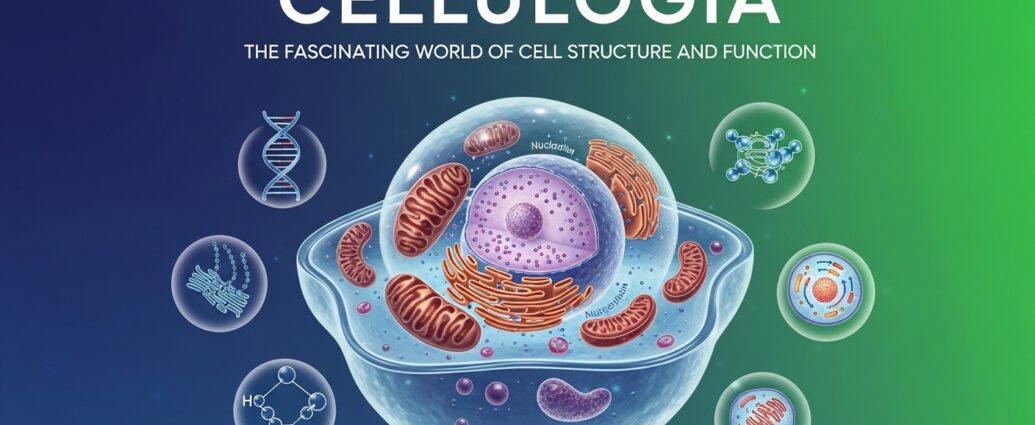
Welcome to the intriguing world of Cellulogia, where we dive deep into the microscopic universe that forms the building blocks of life. Every living organism—be it a towering redwood tree or a tiny bacterium—is composed of cells, each with its own unique structure and function. Imagine peering through a microscope at these miniature factories bustling with activity, orchestrating processes that sustain life itself. Cellulogia is not just about understanding what cells are; it’s about unraveling their complex roles in health and disease, innovation in research, and so much more. Join us as we explore this captivating subject that lies at the heart of biology!
The Discovery of Cells
The story of cell discovery begins in the 17th century. It was Robert Hooke, an English scientist, who first coined the term “cell” in 1665. He observed thin slices of cork through a microscope and noted tiny box-like structures that reminded him of monastic cells.
Hooke’s observations were groundbreaking but limited to dead plant tissue. His work laid the foundation for further exploration into living cells.
It wasn’t until later that Anton van Leeuwenhoek entered the scene. With his improved microscopes, he became the first to observe live cells in microorganisms like bacteria and protozoa. His discoveries opened doors to understanding life at a microscopic level.
These initial findings ignited curiosity among scientists and paved the way for modern cell biology, or Cellulogia as we now refer to it today. Each new observation added layers to our comprehension of life’s building blocks.
The Basic Structure of a Cell
Cells are the building blocks of life, each with a unique structure that supports its function. At their core, cells consist of three main parts: the cell membrane, cytoplasm, and nucleus.
The cell membrane acts as a protective barrier. It regulates what enters and exits by allowing certain substances while blocking others. This selective permeability is crucial for maintaining homeostasis.
Cytoplasm fills the interior space of the cell and contains organelles suspended in a gel-like fluid called cytosol. These organelles perform various essential tasks, from energy production to protein synthesis.
The nucleus serves as the control center. It houses genetic material—DNA—that directs cellular activities. Within it lies nucleolus, where ribosomes are produced.
Together, these components create an intricate system that enables life forms to grow, reproduce, and respond to their environment.
Different Types of Cells and Their Functions
Cells come in many forms, each uniquely designed to fulfill specific roles.
Epithelial cells line the surfaces of organs and structures, acting as protective barriers. Their ability to regenerate quickly makes them essential for healing wounds.
Muscle cells are remarkable entities responsible for movement. They contract and relax, enabling everything from a heartbeat to a sprint.
Nerve cells, or neurons, transmit signals throughout the body. This communication network underpins all bodily functions and responses.
Blood cells play crucial roles too. Red blood cells transport oxygen while white blood cells defend against infection.
Stem cells stand out due to their potential. These versatile units can differentiate into various cell types, offering hope for regenerative medicine.
Together, these diverse cell types work harmoniously within living organisms, ensuring survival and functionality at every level.
The Importance of Cells in Living Organisms
Cells are the building blocks of all life forms. They perform essential functions that sustain organisms, from the simplest bacteria to complex mammals.
Every process in a living organism hinges on cellular activity. Cells generate energy through metabolism, enabling growth and repair. They communicate with each other, coordinating actions necessary for survival.
Specialized cells adapt to specific roles—muscle cells contract for movement while nerve cells transmit signals throughout the body. This specialization creates harmony within biological systems.
Without healthy cells, life itself would cease. Diseases often arise when cellular function falters, leading to complications that can affect entire systems. Understanding cell importance helps us grasp how vital they are in maintaining overall health and well-being.
Cellulogia reveals this intricate world where every tiny component plays a significant role in sustaining life as we know it.
Common Disorders and Diseases Related to Cell Function
Cell function can be disrupted by various disorders and diseases, leading to significant health issues. One of the most well-known is cancer, where abnormal cell growth occurs. This uncontrolled proliferation can create tumors that invade surrounding tissues.
Another condition linked to cellular dysfunction is diabetes. In this case, insulin-producing cells in the pancreas fail to regulate blood sugar levels effectively. This imbalance impacts energy metabolism throughout the body.
Neurodegenerative diseases like Alzheimer’s also highlight the importance of healthy cells. Here, neuronal cell death leads to cognitive decline and memory loss over time.
Furthermore, autoimmune disorders involve immune cells attacking healthy ones, causing chronic inflammation and tissue damage. Each of these conditions underscores how vital proper cell function is for overall health and wellbeing in living organisms.
Advances in Cell Research and Technology
Recent advancements in cell research and technology have transformed our understanding of cellular processes. Innovations in microscopy allow scientists to visualize cells with unprecedented clarity. Techniques like super-resolution imaging provide insights into the intricate structures within cells.
CRISPR gene-editing technology has revolutionized how we approach genetic disorders. This powerful tool enables precise modifications, offering potential cures for various diseases caused by faulty genes.
Moreover, stem cell research is paving new pathways for regenerative medicine. Scientists are exploring ways to harness the unique properties of these cells to repair damaged tissues and organs.
Bioinformatics plays a crucial role too. By analyzing vast amounts of data, researchers can identify patterns that were once invisible, enhancing our grasp on cell behavior and pathology.
These breakthroughs not only deepen our knowledge but also open doors to innovative therapies that could reshape healthcare as we know it. The future looks promising in the realm of cellulogia.
The Future of Cellulogia
The future of Cellulogia is brimming with potential. Advancements in technology are set to transform our understanding of cell functions and structures. Researchers are now harnessing artificial intelligence to analyze cellular data at unprecedented speeds.
With CRISPR and gene editing, scientists can manipulate cells to study diseases more effectively. This innovation opens doors for targeted therapies that could revolutionize treatments for genetic disorders.
Moreover, the integration of nanotechnology promises breakthroughs in drug delivery systems. These tiny carriers can transport medication right into the heart of affected cells, enhancing efficacy while reducing side effects.
As we continue exploring this microscopic universe, collaborations between biologists and engineers will likely yield groundbreaking discoveries. The implications extend beyond medicine; they may influence agriculture, environmental science, and biotechnology as well.
Cellulogia stands on the brink of remarkable change—an exciting journey awaits us all in unraveling life’s fundamental building blocks.
Conclusion
The exploration of Cellulogia opens a window into the intricate world that forms the basis of all living organisms. From their groundbreaking discovery in the 17th century to our understanding today, cells have proven to be fundamental units of life.
Their diverse structures and specific functions contribute significantly to how organisms grow, survive, and interact with their environments. The vast variety of cell types ensures that every organ system operates efficiently, playing its part in maintaining overall health.
Yet, this complexity also highlights vulnerabilities. Disorders such as cancer or genetic diseases arise from disruptions at the cellular level—reminding us just how critical proper cell function is for well-being.
Advancements in biotechnology continue to shape our knowledge about cells and open doors for innovative treatments. With ongoing research into stem cells and regenerative medicine, we are on the brink of remarkable discoveries that could redefine healthcare.
As scientists delve deeper into Cellulogia, they unravel mysteries that may one day allow us to manipulate these building blocks of life more effectively. The future promises not only enhanced medical therapies but also a greater appreciation for life’s most basic elements—the cells themselves.